Avatar

Volodymyr Vovchenko

Theoretical Physicist

Physics Department, University of Houston

About me

Welcome to my homepage!

I am an Assistant Professor of Physics at the University of Houston. Since 2022 I am leading a Nuclear Theory Group at UH. My group’s research primarily focuses on the properties of strongly interacting QCD matter under extreme conditions such as those realized in ultra-relativistic heavy-ion collisions and neutron stars.

Previously, I had obtained my Master degree in Physics at Taras Shevchenko National University of Kyiv in Ukraine, a PhD degree at Goethe University Frankfurt in Germany, and then held appointments as a Research Assistant at the Institute for Theoretical Physics of the Goethe University in Frankfurt, Germany, a Feodor Lynen Research Fellow in the Nuclear Science Division at Lawrence Berkeley National Laboratory and a Research Assistant Professor at the Institute for Nuclear Theory at the University of Washington.

Here you can find information about my research, publications, talks, and projects, as well as my group members.

Interests

  • QCD Theory and Phenomenology
  • Heavy-Ion Collisions
  • Neutron Stars
  • Scientific Computing

Education

  • PhD in Theoretical Physics, 2018

    Goethe University Frankfurt, Germany

  • MSc in Physics, 2013

    Taras Shevchenko National University of Kyiv, Ukraine
  • BSc in Physics, 2011

    Taras Shevchenko National University of Kyiv, Ukraine

Meet the Team

The Nuclear Theory Group at University of Houston

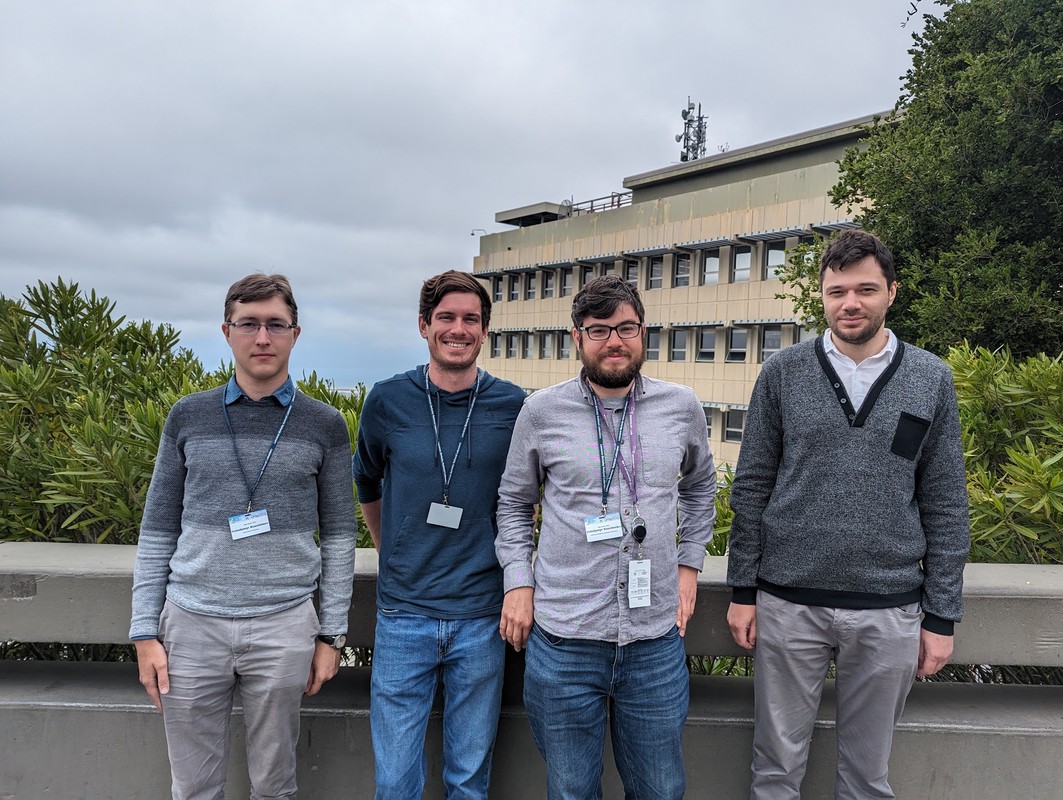
Group Photo
Nuclear Theory Group at CPOD2024

Principal Investigator

Avatar

Volodymyr Vovchenko

Group Leader

QCD Theory and Phenomenology, Heavy-Ion Collisions, Neutron Stars, Scientific Computing

Postdoctoral Researchers

Avatar

Grégoire Pihan

Postdoctoral Researcher

Hot and Dense QCD Matter, Neutron skin, Fluctuations

Avatar

Roman Poberezhniuk

Postdoctoral Researcher

Heavy-Ion Collisions, Dense QCD Matter, Fluctuations

Graduate Students

Avatar

Jean Guma De La Vega

PhD Student

QCD Thermodynamics, Heavy-Ion Collisions

Avatar

Tripp Moss

PhD Student

Dense QCD Matter, Neutron Stars

Avatar

Volodymyr Kuznietsov

PhD Student

Hot and Dense QCD Matter, Molecular Dynamics, Critical Point

Undergraduate Students

Avatar

Jonathan Parra

Undergraduate Researcher

Fluctuations in Heavy-Ion Collisions

Recent & Upcoming Talks

The search for the QCD Critical Point

Presentation on the search for the QCD critical point at the KITP conference on Probing our Understanding of Quark-Gluon Matter.

Hadron resonance gas with density-dependent interactions for neutron stars and heavy-ion collisions

Presentation on a hadron resonance gas model with density-dependent interactions for neutron stars and heavy-ion collisions at SQM2026.

Proton cumulants from hydrodynamics: From baseline to EoS inference
Presentation on proton cumulants at the Workshop on High Baryon Density Physics in High-Energy Nuclear Collisions at LBNL.

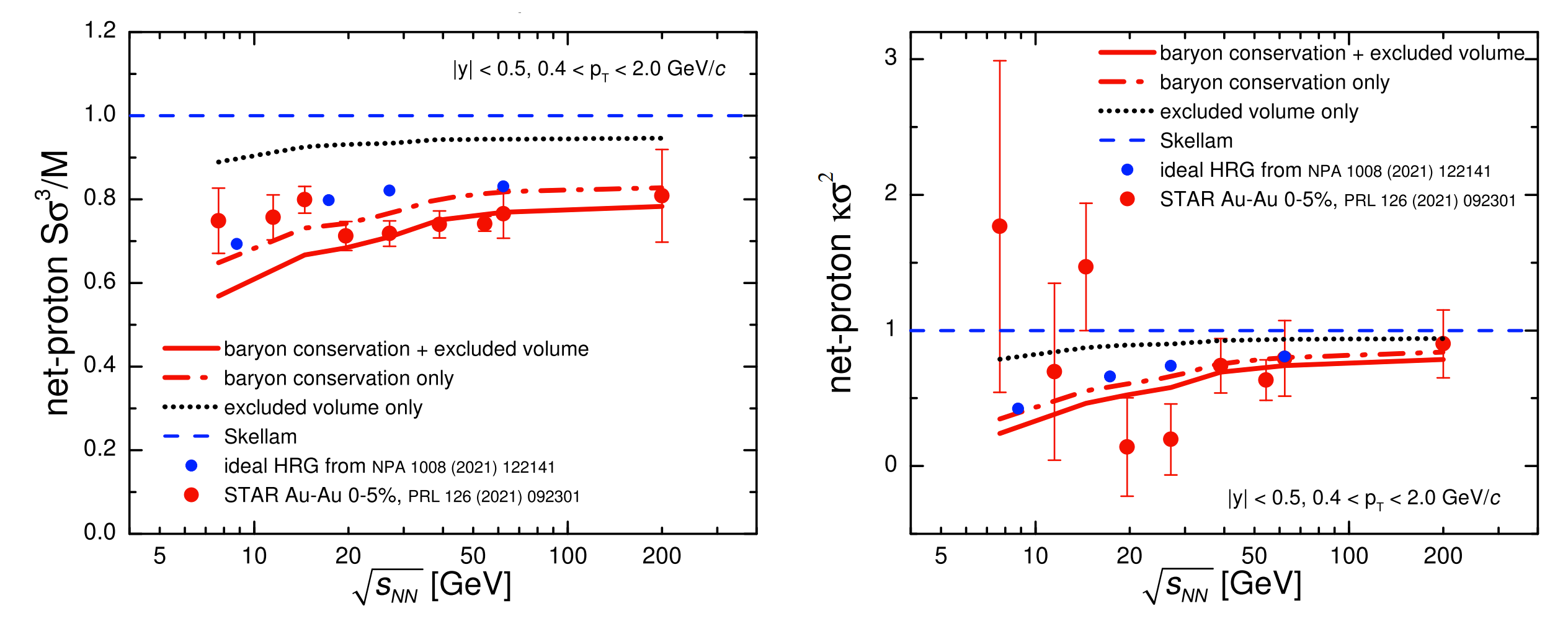
Disentangling equation of state and canonical ensemble effects on proton fluctuations via a density correlations formalism

Presentation on disentangling equation of state and canonical ensemble effects on proton fluctuations via a density correlations formalism at the APS Global Physics Summit 2026.

Phase Structure of Strongly Interacting Matter under Extreme Conditions

Talk on the phase structure of QCD and the nature of the transition between hadronic matter and quark-gluon plasma at extreme temperatures.

Teaching

Courses taught

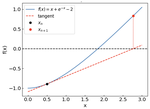
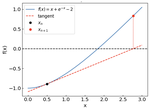
This is the list of courses that I taught as well useful links. I published the materials for PHYS6350 Computational Physics course as a online book here.

Spring 2026: Statistical Physics (PHYS6327)

Physics Department at the University of Houston
Syllabus
Textbooks: Statistical Mechanics by Pathria & Beale (4th ed.), Greg Morrison lecture notes

Spring 2025: Computational Physics (PHYS6350)

Physics Department at the University of Houston
Class size: 13 students
Online book
Syllabus
Lecture notes and code

Fall 2024: College Physics II (PHYS1302)

Physics Department at the University of Houston
Class size: 90 students
Syllabus
OpenStax College Physics Textbook

Spring 2023: Computational Physics (PHYS6350)

Physics Department at the University of Houston
Class size: 15 students
Online book
Syllabus
Lecture notes and code

Coding projects


Here you can find my coding projects, which include code for high energy physics applications and also several Android apps that model and visualize different physical systems with OpenGL on an Android device.

*

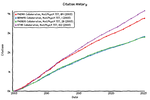
INSPIRE Citation History

A tool to visualize and compare citation histories of scientific papers from INSPIRE-HEP database

Try it online!
Source code

CUDA Molecular Dynamics

Molecular dynamics simulation and visualization of the Lennard-Jones system utilizing CUDA-enabled GPU’s

Source code

Thermal-FIST

A C++ package designed for the convenient general-purpose analysis within a family of hadron resonance gas (HRG) models.

Reference: Comput. Phys. Commun. 244, 295 (2019)

Source code
Online documentation

Quantum Oscillator

Get it on Google Play An Android app to visualize the wave functions of the three-dimensional harmonic oscillator.

10,000+ installs / 4.6 rating

Source code

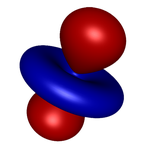
Hydrogen Atom

Get it on Google Play An Android app to visualize the electron orbitals of the hydrogen atom in 3D.

10,000+ installs / 4.4 rating

Source code

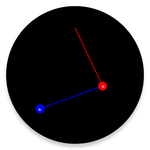
Pendulum Studio

Get it on Google Play An Android app to simulate the motion of nine different pendulum systems in real time.

50,000+ installs / 4.6 rating

Source code

Contact